J · 2026 · 002
Museums & exhibitions 3 min read
Published Updated
How to choose museum display cases: glass, metal, lighting and access
A display case is not just a box with glass. Decisions on glass, frame, lighting and access dictate how many years of maintenance you're buying.
- museum vitrines
- low-iron glass
- CRI lighting
- Oddy test
- conservation
Anatomy of a museum display case: 4 key components
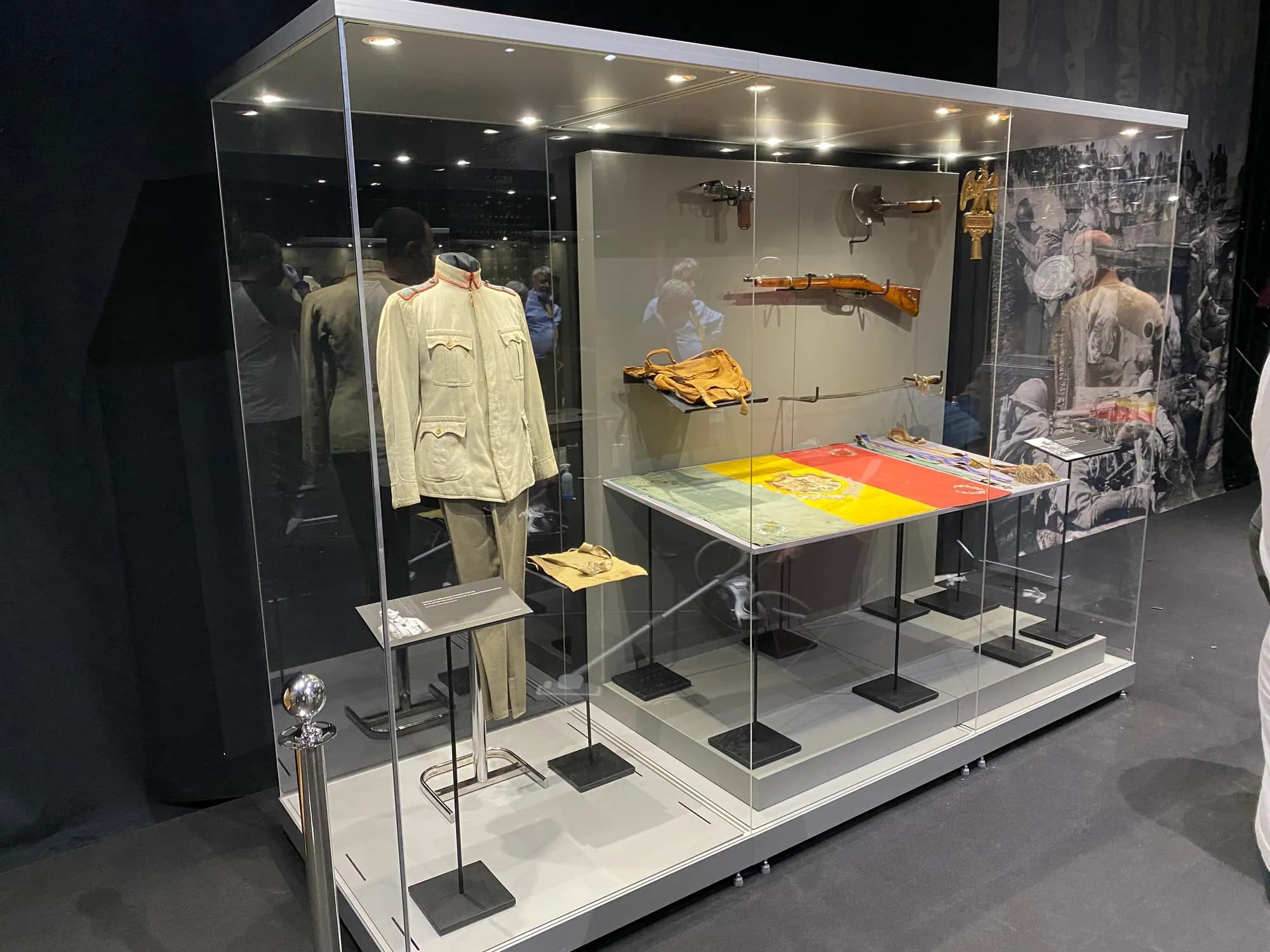
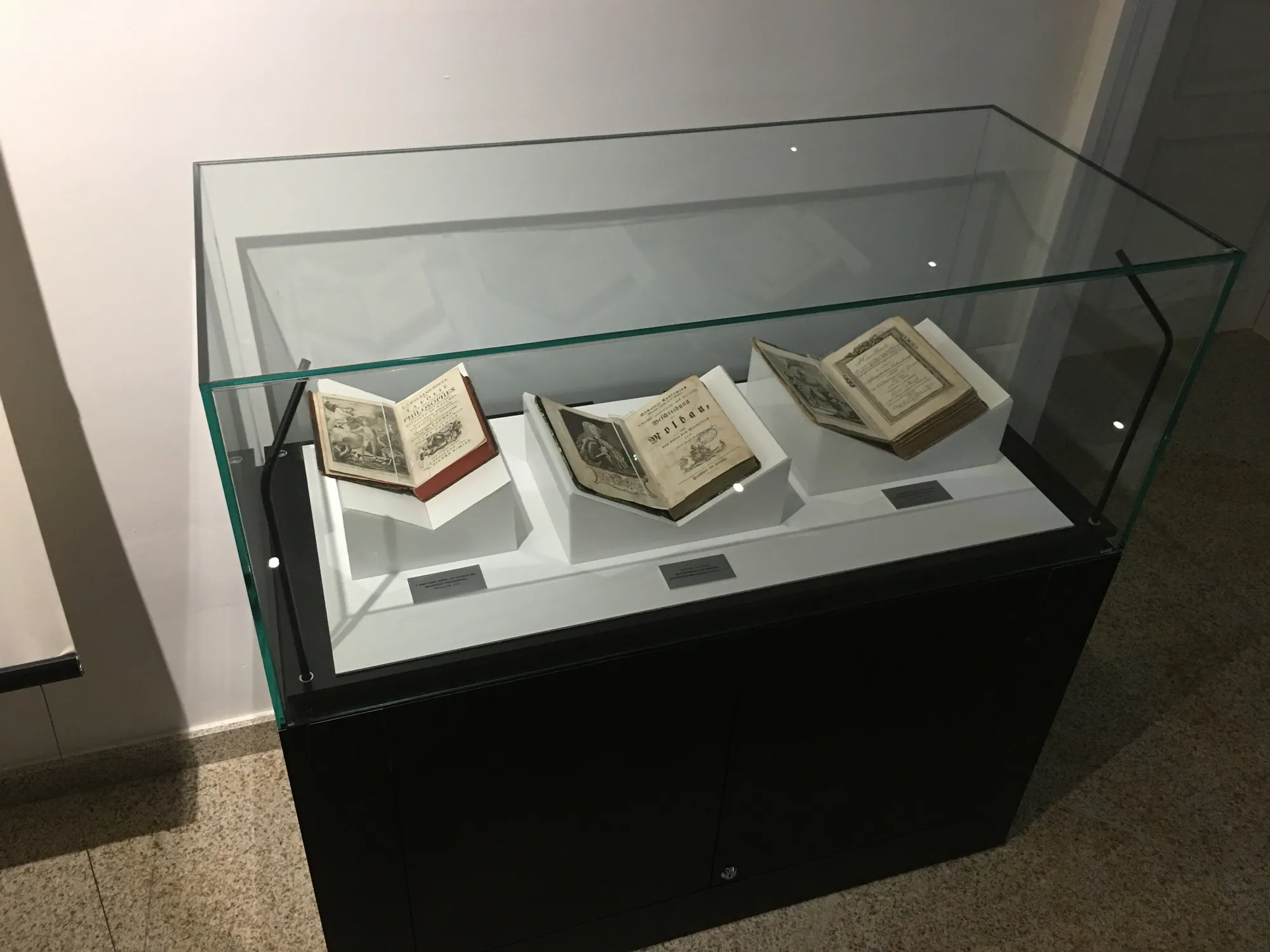
A museum case has four components that work together: the glass (visibility and UV protection), the frame (stability and aesthetics), the lighting (correct rendering of the object) and the access system (swap and cleaning without dismantling). A bad decision on any one is paid for by the other three.
A good case is sealed for microclimate, invisible as a presence, and controlled at access. The rest is execution detail.
Glass: low-iron vs float, thicknesses, anti-reflective
Standard float glass has a greenish cast from its iron content, visible especially on edges and large surfaces. Low-iron (extra-clear) glass reduces the iron and renders the object's colour faithfully — which is why it's standard for cases holding colour-sensitive objects. Common thicknesses are 6-10 mm, laminated or toughened where safety requires.
Anti-reflective treatment is worth it on front panels, where stray reflection steals the object. It costs more, but the visual difference is immediate.
Frame: metal, wood, hybrid — differences visible at 6 months
A metal frame (patinated or matte-lacquered steel) is dimensionally stable and ages in a controlled way; choose a matte finish, not chrome, so it doesn't compete with the object through reflections. Wood brings warmth but moves with humidity — it needs a stable species and correct finishing. Metal + wood hybrids combine structural stability with a warm surface.
The difference doesn't show at delivery, it shows at 6 months: a cheap frame develops play in its joints and loses its seal. The structure is where you don't cut cost.
Integrated lighting: CRI, Kelvin, accent vs ambient
Lighting integrated into the case needs CRI ≥ 95 for correct rendering and a temperature chosen for the object — typically 2700-3500K for warm materials, more neutral for cold objects. The accent (on the object) is controlled independently of the ambient, otherwise you lose the visual hierarchy.
Quality LED is mandatory: it cuts UV and IR almost entirely and gives off little heat inside the enclosure, unlike halogen. In a sealed case, source heat becomes a microclimate problem, not just a comfort one.
Access and security: key, hinge, lock
Access decides how easily you maintain the case. A well-thought case opens for object swap or cleaning without dismantling the glass or the lighting. Concealed hinges and discreet locks keep the aesthetic clean and control who gets in.
Security is balanced against conservation: secure locks, but quick access for the custodian in an emergency. Systems are chosen on the object's value and the institution's protocol, not from a catalogue.
Material safety (Oddy test): what goes inside the case
Any material inside the case — adhesives, paints, gaskets, backing textiles — can off-gas compounds that corrode or stain the object over time. The Oddy test is the established method (ICOM / British Museum): materials are aged in an accelerated way, at temperature, beside silver, copper and lead coupons, and the result classes them as suitable, temporary or unsuitable.
In practice, you don't put an unvalidated material next to a heritage object. It's a step that's easy to skip and expensive to pay for.
Real cost: production, installation, 5-year maintenance
The price of a case isn't just production. The real cost adds specification and design, production (glass, structure, lighting), installation within the agreed window, and maintenance over 5 years — object swaps, cleaning, microclimate checks.
A case that's cheap to buy but poorly sealed becomes expensive to maintain and risky for the object. The correct calculation is over the lifetime, not the delivery invoice.
Frequently asked
- Standard float glass contains iron that gives it a greenish cast, visible on edges and large surfaces — it slightly distorts the object's colour. Low-iron glass reduces the iron, is almost colourless and renders colour faithfully. For cases where the object's colour matters, low-iron is the correct choice; the price difference is justified by clarity.
- We recommend CRI ≥ 95 for faithful rendering and a temperature of 2700-3500K for most historical (warm) objects, adjusting toward neutral for cold pieces or documents. The source should be quality LED, to cut UV and IR and avoid heating the enclosure. The lux level is capped by the object's sensitivity class.
- For a custom case with low-iron glass, a metal structure and integrated lighting, production typically takes 6-10 weeks from approved spec to delivery, depending on complexity and finishes. Add design time at the start and the installation window at the end. Very short timelines usually mean compromises on sealing or finish.
Related capabilities
Related projects
Have a project in mind?
We reply within 1–2 working days with the first steps; the full quote comes after a site visit or drawings.
Send a brief