J · 2026 · 001
Museums & exhibitions 3 min read
Published Updated
How to design a museum space: objects, visitor flow, lighting and protection
Designing a museum starts from the objects on display and works toward the visitor, not the other way around. Here's what to decide before ordering the first display case.
- museum design
- exhibitions
- lighting
- display cases
- conservation
What „museum design” means and which decisions come first
Designing a museum is not decorating a room; it's a chain of technical decisions that start from the object. Before furniture, colour or graphics, three things get fixed: what you show, how the visitor moves among the objects, and what conservation conditions the pieces require. Everything else — cases, pedestals, light, finishes — derives from those three answers.
Order matters. A room plan drawn before the object inventory almost always gets redone, because the real cases don't fit where they looked good on the sketch.
Object inventory: sensitivity classes and their implications
Every object falls into a sensitivity class that dictates its environment. Textiles, paper, watercolour and photography are highly light-sensitive — a 50 lux ceiling and limited annual exposure. Wood, bone, ivory and leather sit at a medium level, 150-200 lux. Metal, stone, ceramic and glass tolerate 300 lux and above.
Beyond light, you record microclimate needs (stable relative humidity, typically 50% ±5), UV sensitivity and vibration. This inventory becomes the specification that drives everything downstream.
Visitor flow: guided linear vs free
A guided linear route walks the visitor along a single path with a controlled narrative — right for chronological collections or story-driven exhibitions. A free route lets the visitor choose, good for thematic collections where each piece stands on its own.
The choice isn't aesthetic, it's structural: it changes case positions, circulation widths (90 cm clear minimum, more in group zones), stopping points and where the accent light falls. Decide it before the plan, not after.
Lighting: lux levels, CRI, UV and IR control
Museum lighting works in three layers: ambient (orientation in the room), accent (directs attention) and case (on the object). Each has its own level and its own control, otherwise the sensitive object gets the wrong light.
The basics: respect the lux ceiling for the object class, use sources with CRI ≥ 90 (ideally ≥ 95) to render colour correctly, and strip out UV and IR — quality LED cuts them almost entirely, unlike halogen. Cold light on a warm object is a mistake you see immediately.
Display cases and pedestals: choice and technical constraints
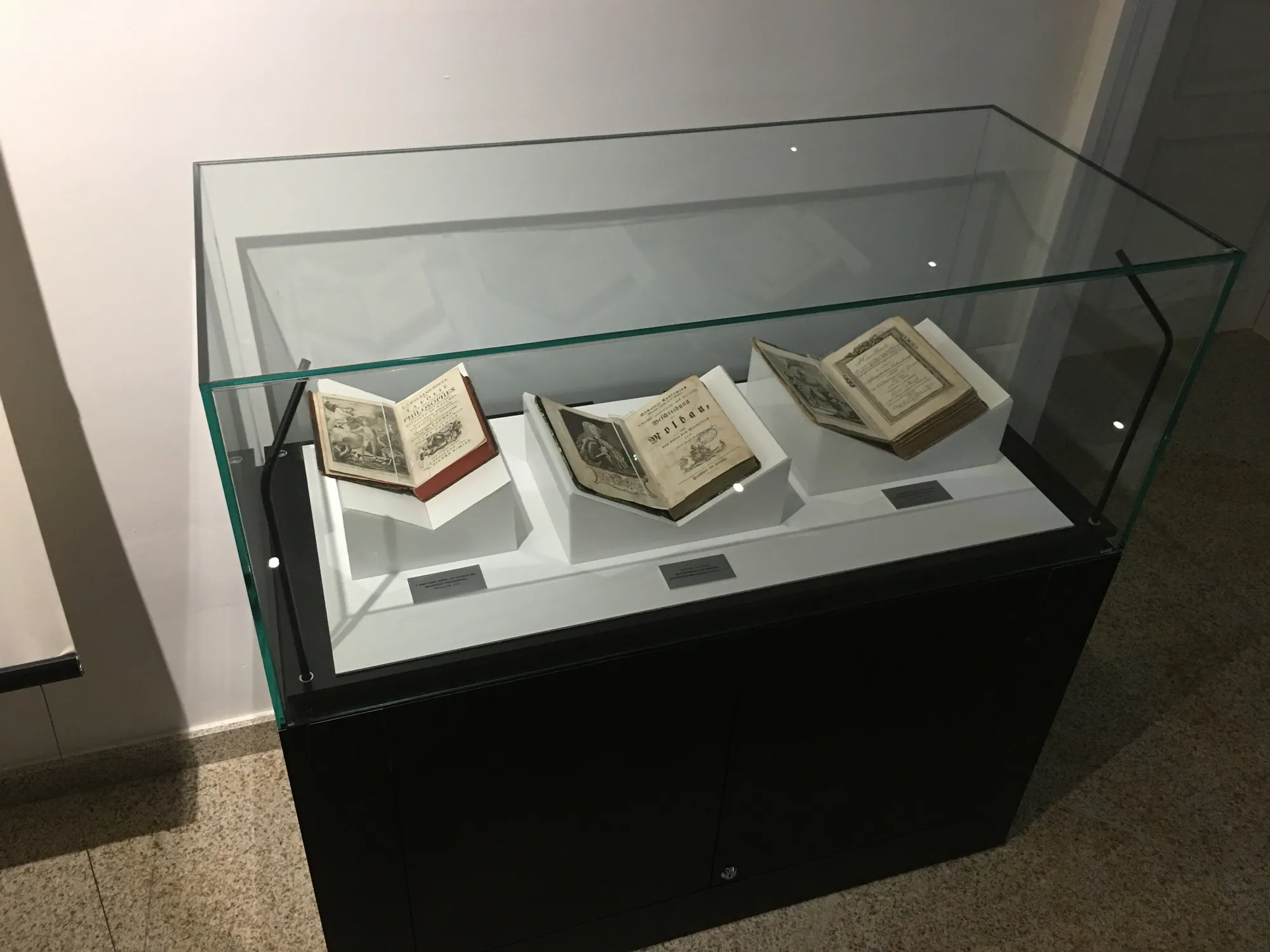
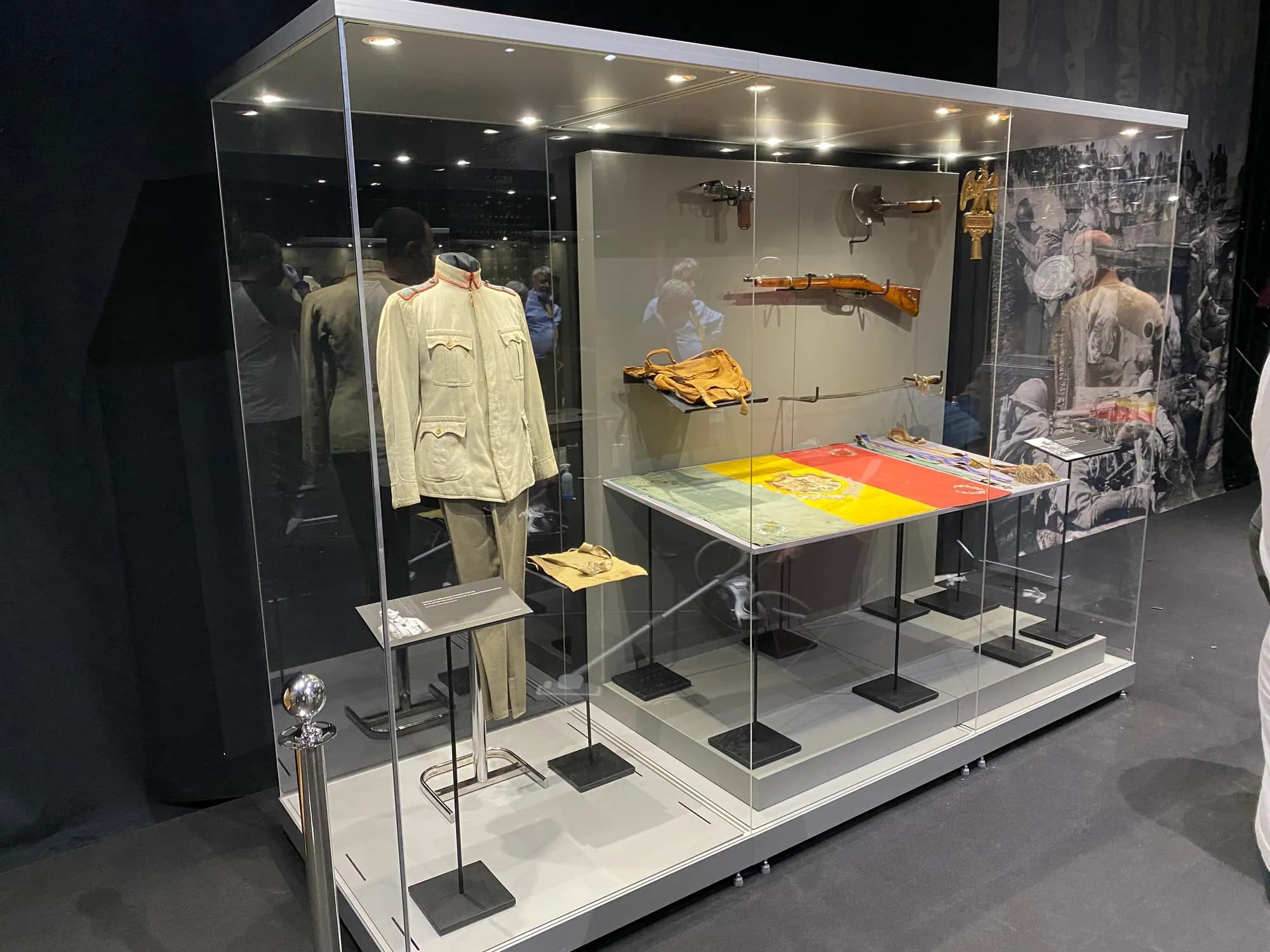
Cases and pedestals are designed from the inventory, not bought from a catalogue. Display height is set from eye line and object type; a small object needs proximity, a monumental one needs distance. Mounts are made to the piece — invisible and reversible — so they don't stress the material.
The technical constraints that matter: sealing for microclimate, low-iron glass for clarity, controlled access for swaps and cleaning, and lighting cables integrated into the structure, not hung from it.
Protection and maintenance: what, how, with whom
A well-designed museum stays that way only with a maintenance plan. From the start you set what gets cleaned and how often, who has access inside the cases, how an object is swapped without dismantling everything, and how the microclimate is checked.
Protection also covers security (locks, sensors) and preventive conservation (silica gel or humidity buffers inside cases, periodic checks of the values). Without a protocol, even the best case degrades within two years.
Common mistakes and how we avoid them at HORACE
The most common mistakes are about order, not execution: cases ordered before the objects are known, light flooded uniformly everywhere, installation promised in „two days” without a real night window.
At HORACE we work in reverse — object inventory first, then flow, then light, then cases designed to the piece. We calibrate lighting in the atelier, under equivalent objects, and we deliver with an installation protocol. The difference doesn't show at the opening; it shows at 12 months.
Frequently asked
- It depends on scale, but a mid-sized project — one hall with 15-30 objects and custom cases — typically fits in 3-5 months from brief to opening: about a month of concept and specification, two to three months of production and atelier calibration, then installation within the agreed window. Timelines under a month are a risk signal, not a sign of efficiency.
- We work to the established international references: ICOM guidance for the display environment, the lighting and microclimate values from conservation practice, and the Oddy test for materials that go inside a case. We don't invent thresholds — we apply the ones museology has already validated, and we document them in the project specification.
- Sometimes yes, if they were designed modular and the new objects fall into the same sensitivity and size classes. In practice full reuse is rare — mounts change, sometimes the lighting, sometimes the glass. We assess the existing cases first and tell you honestly what can be reused and what isn't worth it.
Related capabilities
Related projects
Have a project in mind?
We reply within 1–2 working days with the first steps; the full quote comes after a site visit or drawings.
Send a brief